Our Story
LMN Addiction Treatment began inside a university laboratory. In 2018, a team of addiction medicine researchers at a Southern California university published findings that challenged conventional treatment models. Their multi-year study of over 1,200 patients revealed a striking pattern: individuals whose families were actively integrated into the clinical process showed relapse rates 40% lower than those treated in isolation. The data was clear, but few facilities were structured to act on it.
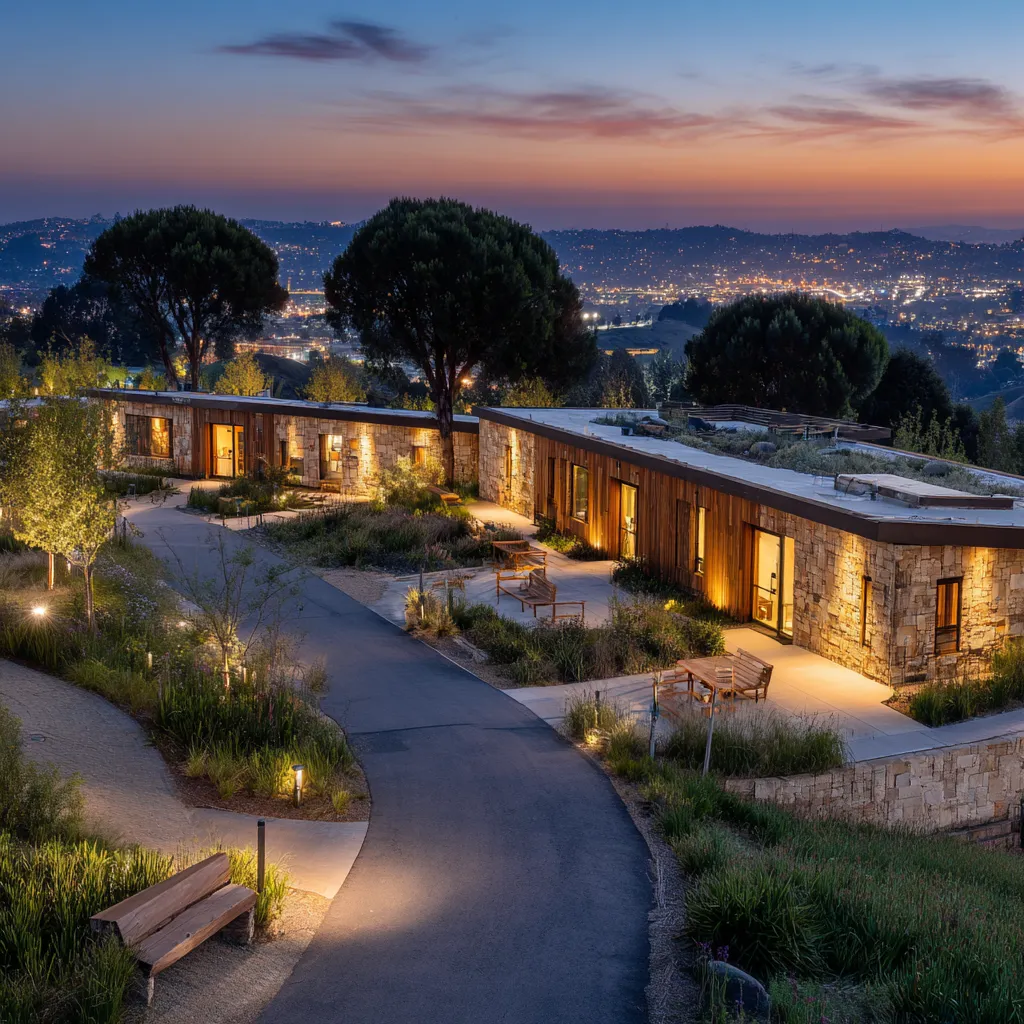
Dr. Catherine Huang, the study's lead researcher, and her colleague Dr. Marcus Osei decided to bridge the gap between academic insight and clinical practice. They secured funding, assembled a multidisciplinary team, and opened LMN Addiction Treatment on Pacific Avenue in Long Beach in 2018. The 45-bed facility was designed from the ground up to accommodate families -- not as visitors, but as participants. Family lodge accommodations, joint therapy rooms, and picnic grounds for informal reconnection were all built into the original blueprint.
Over eight years, LMN has served more than 5,000 patients and their families. The research program that birthed this facility continues today: clinical outcomes are tracked, protocols are refined seasonally, and the founding commitment to data-driven family healing remains the backbone of every decision we make.
Our Mission
LMN Addiction Treatment exists to ensure that high-quality, family-inclusive addiction care is available to every community member who needs it -- regardless of economic background, insurance status, or personal history. We believe that recovery is not a privilege; it is a right that belongs to every family touched by substance use disorders.
Our commitment to community equity means we accept Medicaid, Medicare, and a broad range of insurance plans. We actively partner with local organizations, community health centers, and faith-based groups throughout Long Beach to reduce barriers to treatment access. When a family reaches out to LMN, our first question is never about payment -- it is about what kind of support they need most.
Treatment Philosophy
Our treatment philosophy rests on three interconnected pillars that guide every clinical decision at LMN:
Family Systems Theory
Addiction does not develop in a vacuum, and it cannot be treated in one. Drawing from the foundational work of Murray Bowen and Salvador Minuchin, our clinicians view each patient within the context of their family system. Therapy sessions explore generational patterns, communication breakdowns, and the roles family members unconsciously adopt during active addiction. By addressing the system -- not just the individual -- we create conditions for sustainable change that the whole household can maintain.
Creative Expression Healing
Words alone cannot always reach the places where trauma lives. Our Creative Arts Studio and Music Room are staffed by licensed expressive arts therapists who use painting, sculpture, songwriting, and drumming as clinical tools. These modalities help patients access and process emotions that resist conventional talk therapy, building new neural pathways for self-expression and emotional regulation.
Mind-Body Connection
Recovery demands attention to the whole person. Our mindfulness-centered daily schedule includes extended morning meditation, breathwork sessions, somatic experiencing, and movement practices in our Heated Therapy Pool. These practices teach patients to inhabit their bodies again after years of numbing, cultivating the interoceptive awareness that research links to reduced relapse rates.
Our Team
Dr. Catherine Huang, MD, FASAM
Medical Director & Co-Founder
Dr. Huang led the university research study that became the clinical foundation for LMN. Board-certified in addiction medicine with a fellowship from the American Society of Addiction Medicine, she oversees all medical protocols, detox procedures, and medication-assisted treatment plans. Her published research on family-integrated detoxification has been cited in over 80 peer-reviewed journals.
Dr. Marcus Osei, PsyD
Clinical Director & Co-Founder
Dr. Osei brings 15 years of clinical experience in family systems therapy and dual diagnosis treatment. He designed LMN's family therapy curriculum and trains all counseling staff in Bowenian techniques. His approach centers on helping families identify and interrupt intergenerational addiction patterns while building new communication frameworks.
Angela Reeves, LMFT
Director of Family Programs
Angela coordinates all family therapy sessions, spouse support groups, and family week programming at LMN. A licensed marriage and family therapist with specialized training in addiction-affected families, she ensures that every patient's family receives structured, therapeutic involvement from the moment of admission through aftercare planning.
James Whitfield, LCSW, CADC
Lead Addiction Counselor
James manages LMN's individual counseling and group therapy programs. A licensed clinical social worker and certified alcohol and drug counselor with lived recovery experience, he brings both clinical expertise and personal understanding to his work. He specializes in CBT, motivational interviewing, and relapse prevention for patients with co-occurring disorders.
Priya Nair, ATR-BC, LPC
Creative Arts Therapy Director
Priya leads LMN's creative expression healing programs, including art therapy, music therapy, and expressive movement sessions. Board-certified in art therapy and licensed as a professional counselor, she developed the studio-based curriculum that integrates creative modalities with trauma processing. Her work helps patients discover non-verbal pathways to emotional healing.
What Our Alumni Say
"I fought going to rehab for two years. Every excuse in the book. When my sister finally drove me to LMN, I sat in the parking lot refusing to get out of the car. The intake counselor came outside, sat on the curb with me, and just talked. No pressure, no judgment. That moment of patience set the tone for my entire stay. The breathwork sessions became my anchor, and the family therapy gave my sister and me space to say the hard things. I went in kicking and screaming. I left with clarity I hadn't known in a decade."
"Addiction turned me into a stranger in my own home. My kids stopped running to the door when I came in. My wife stopped making eye contact. At LMN, the family systems work helped me understand how deeply my behavior had rewired our household. During family week, my 12-year-old read me a letter she'd written -- it broke me open in the best possible way. We're two years into rebuilding now. Dinners together, homework help, Saturday mornings at the park. LMN didn't just save me; it saved our family."
"When my husband entered LMN's program, I was exhausted, angry, and honestly not sure our marriage would survive. The spouse support group became my lifeline. Hearing other partners share similar stories reminded me I wasn't alone. The joint therapy sessions taught us how to communicate without accusations, how to rebuild trust one small promise at a time. Watching him participate in the meditation and creative arts programs -- seeing him find peace -- gave me hope I'd given up on. We're still doing the work, but we're doing it side by side."